
What to Expect During Chemotherapy
While Chemotherapy destroys cancer cells, it can also destroy or harm rapidly dividing healthy cells, such as those that line your mouth and intestines, cells in your bone marrow, hair follicles, and reproductive cells. Damage to healthy cells may cause side effects such as low blood cell counts, nausea, mouth sores, diarrhea, hair loss, infertility, and others.
When it comes to Chemotherapy, everyone is different. Treatment is tailored to each patient based on what your oncologist feels is the most appropriate for your individual diagnosis.
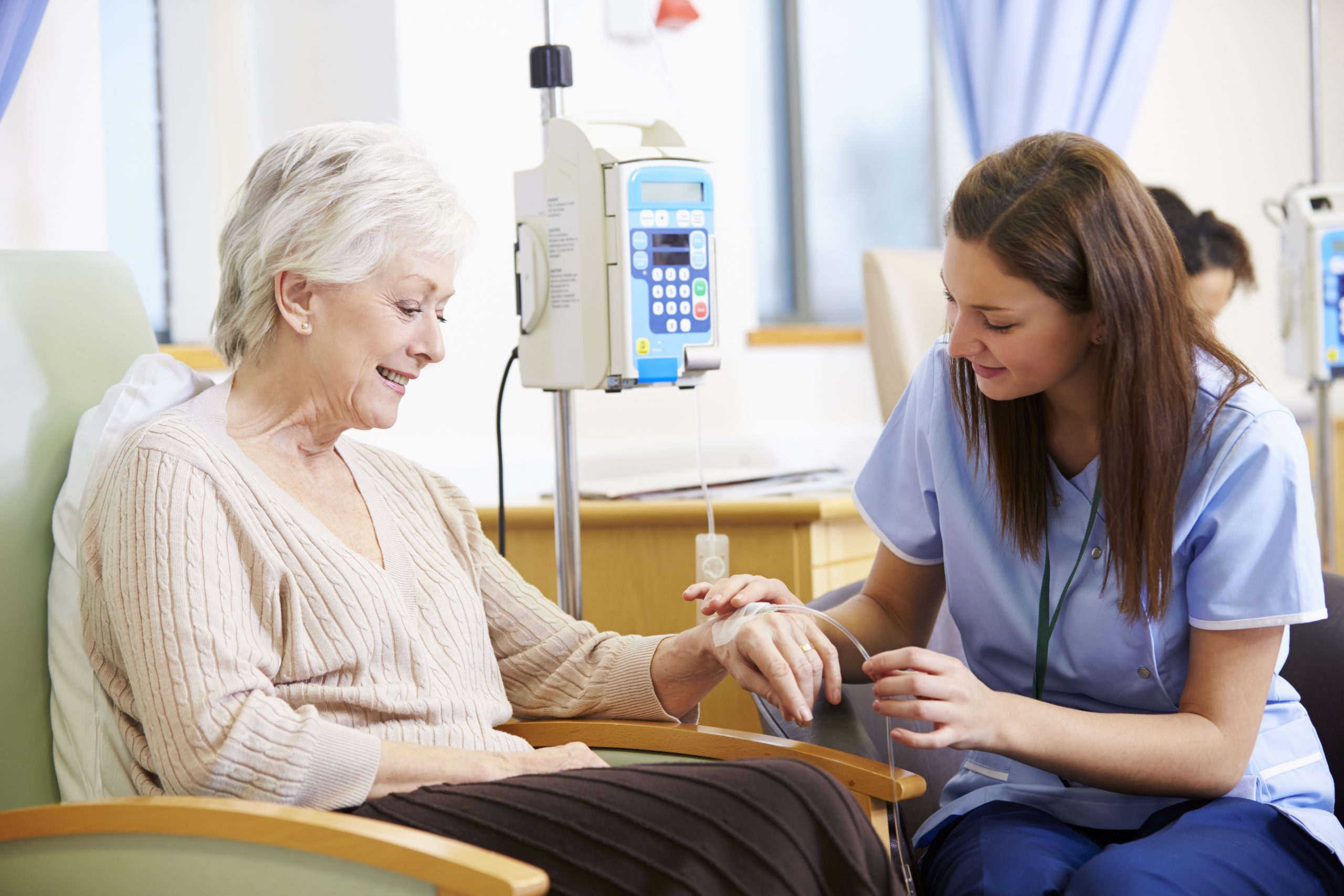
At Highlands Oncology, you will attend a new patient class before your Chemotherapy treatment begins. During this time, you will have the opportunity to ask our knowledgeable nursing staff any questions you might have. Treatment time and frequency is dependent upon the treatment plan your oncologist has outlined for you. Our infusion suite provides a comfortable environment for you and your caregiver while receiving treatment.
Often doctors will combine drugs so they are more effective. A combination of drugs may be given daily, weekly, or every three to four weeks. Usually, there is a break between cycles of Chemotherapy which allows for your body and your blood counts to recover. Multiple cycles of Chemotherapy are given to destroy more cancer cells.
Neoadjuvant Chemotherapy refers to medications given before surgery to shrink a tumor, while adjuvant Chemotherapy refers to drugs given after surgery to help prevent the cancer from coming back. Chemotherapy also may be used alone or in combination with surgery or radiation therapy.
Hormone therapy is used to treat certain cancers, such as breast and prostate cancer that depend on hormones for their growth. Hormone therapy keeps cancer cells from receiving or using the hormones they need.
If you have questions or concerns that occur between treatments, please call us at 479-587-1700.
How Is Chemotherapy Given?
Most anti-cancer drugs are given intravenous (IV) directly into a vein. These drugs may also be injected into a muscle, given by mouth, or given through a central line, PICC line, or port.
- Central line or PICC line: a thin, flexible tube that stays in place until treatment is over. One end of the catheter is placed in a large vein in the chest or the arm, while the other end remains outside the body. PICC stands for peripherally inserted central catheter.
- Port: a small device with a hollow space inside that is sealed by a soft top and has a small flexible tube called a catheter. The port will be implanted by a surgeon, usually in the upper chest. It is placed beneath your skin and the catheter is inserted inside a blood vessel.
Other sources of administration include:
-
Intraperitoneal (IP): drugs may be given directly into the abdomen through an intraperitoneal catheter.
-
Intrathecal: drugs can reach cancer cells in the central nervous system (CNS) through intrathecal administration. The anticancer drugs enter the cerebrospinal fluid through a needle placed in the spinal column or through a device placed under the scalp, called an Ommaya Reservoir.
Theranostics
The word “theranostics” comes from a combination of the words therapeutics and diagnostics. Theranostics is a personalized approach to treating cancer, using both diagnostics and therapy.
Theranostics uses a PET scan to see specific targets, known as tumor receptors, present on tumor cells. A special radiotracer is used, which makes these targets visible on the scan. Following the scan, a radioactive drug is used to treat the tumors. The drug is given as an injection and selectively targets the tumor cells while avoiding healthy cells
How Often Will I Receive Chemotherapy?
How often you get Chemotherapy and how long your treatment lasts depend on the kind of cancer you have, the goals of treatment, the drugs being used, and how your body responds to them. You may get treatments daily, weekly, or monthly and are given in cycles. There are usually breaks between Chemotherapy so that your body can build new cells and regain its strength.
Do’s and Don’ts
Do:
- DO make a list of your current medications, doses, and how often you are taking these medications. Include over-the-counter medications that you take. Carry this list with you at all times. This list will be helpful for any healthcare professional caring for you.
- DO leave messages on our voicemail when we are unable to answer the phone when you call. Your phone call will be returned.
- DO keep a thermometer in your home and use it if you feel that you are running an elevated temperature. Please call if your temperature is 100.4 or greater.
- DO take your medications as prescribed. If they are prescribed on an “as needed” basis, take them when you need them. If they are prescribed on a “scheduled” basis, take them at the times that have been outlined for you. Some medications are time-released. Please do not take any more or any less than has been prescribed. These are meant to keep a constant level of the medication in your blood. Let us know if you think you need more or less of the medication.
- DO take your anti-nausea medication as it has been prescribed. You may be instructed to take this medication for a day or two following your treatment. It is easier to prevent nausea and vomiting than to stop it once it has started. If you have nausea or vomiting that is not controlled by your medications, please notify us.
- DO wear clothes that are comfortable with loose or short sleeves on the day of your treatment. If you are cold-natured, wear clothes that will keep you warm.
- If you have a catheter or port in your upper chest, try to wear a shirt or blouse that opens down the front or has a big neck. This will keep you from having to undress.
- DO apply EMLA cream to your port site 60 minutes before your appointment if you were given a prescription for this, and cover with a dressing or plastic wrap to keep the cream in place.
- DO bring the following with you on the day of treatment:
- Snacks or lunch. We provide our patients with coffee and a selection of sodas, juices, or water, and crackers.
- Something to read, watch, or listen to.
- DO have a family member or friend drive you to and from the clinic on the day of treatment.
- DO flush the toilet with the lid down for the first 48 hours following Chemotherapy. Flush twice, the second flush helps to rinse any Chemotherapy residues out of the bowl.
- DO wear gloves when handling linens contaminated with blood, feces, urine, or vomit if it is within the first 48 hours following Chemotherapy. Wash these linens separately in hot water.
DoN’T:
- DON’T suffer through side-effects such as nausea, vomiting, diarrhea, constipation, or pain. Many times, all it takes is just a phone call to find out that there is something that we can do to help you.
- DON’T wait until the office opens to try to obtain help. A doctor is on call at all times when the office is closed. If you are experiencing a problem, and need help, call 479- 587-1700. Seek help at the time you need it.
- DON’T wait until you are about to run out of your medication. Call the clinic a day or two ahead of time. We only refill narcotics during normal business hours.
- DON’T take aspirin, ibuprofen, or any other non-steroidal anti-inflammatory drugs (NSAIDs) while you are receiving Chemotherapy unless approved by your doctor. These drugs may cause you to bleed.
- DON’T eat spicy or greasy foods the day of or 24 hours following your treatment.
- DON’T hesitate to ask questions. You’ve heard it before–no question is a stupid question.